What Rainy Season Does to Your Irrigation System (While You’re Not Looking)
From June through September, most of us in Tampa Bay stop thinking about our sprinklers. The lawn is green, it rains almost every afternoon, and the irrigation system just runs in the background. That’s understandable — but a few months of inattention can cause problems that don’t show up until the rain stops in October and the lawn starts to struggle.
Here are four things worth knowing.
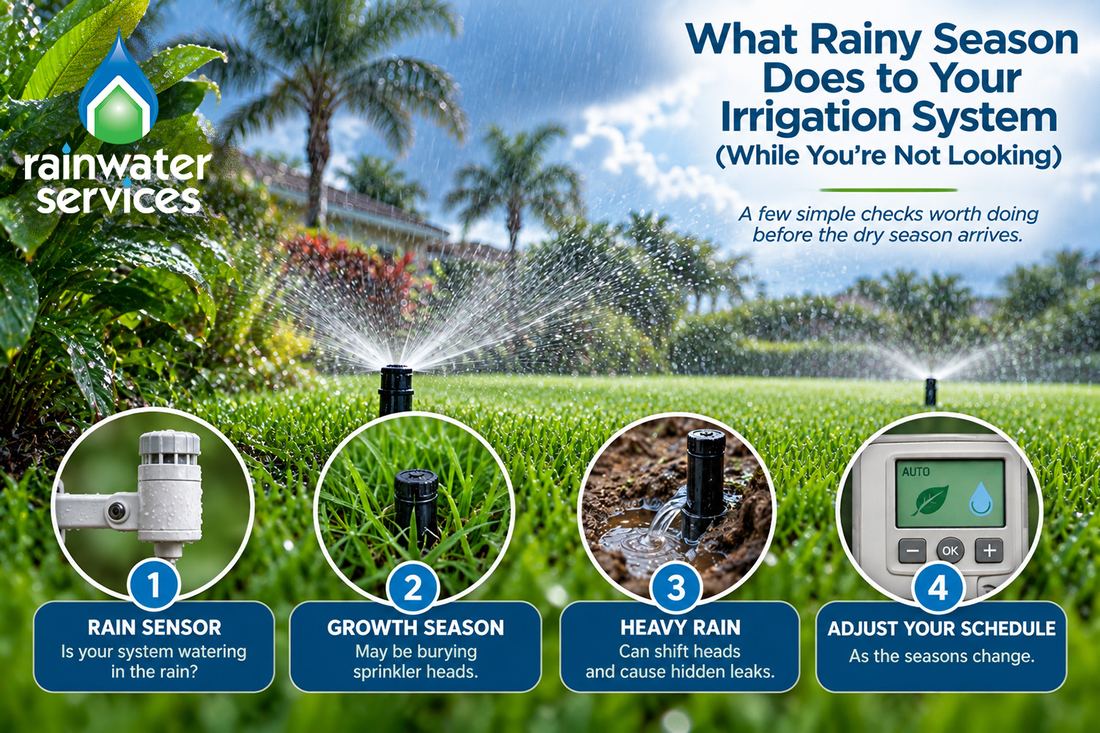
1. Your system may be watering in the rain.
Florida law requires automatic irrigation systems to have a working rain sensor that shuts off watering after enough rainfall. These sensors wear out over time, and a failed one lets your system run on schedule no matter how wet it is. Overwatering during rainy season wastes water and money, and it can encourage fungus and shallow roots in St. Augustine grass.
Quick check: after a solid afternoon storm, see whether your system still runs the next morning.2. Growth season buries sprinkler heads.
Summer is peak growing time for grass and shrubs. Turf can grow over spray heads, and hedges can grow into the spray pattern. When dry season comes, those areas get less water than you think, and brown patches appear.
Quick check: walk the yard while each zone runs and look for heads that are blocked, tilted, or sunk below the grass line.3. Heavy rain shifts things.
Saturated soil moves. Heads tilt, lines settle, and small leaks can hide easily when the whole yard is already wet. A leak you can’t see in August becomes a water bill you notice in November.
4. Your controller schedule is probably set for a different season.
The schedule that made sense in April is rarely right for September, and the September schedule won’t be right for January. Adjusting run times as the seasons change is one of the simplest ways to save water.
The takeaway
None of these are emergencies. They’re the small, gradual kind of wear that’s easy to miss — and much cheaper to catch early than after the lawn shows damage. A few minutes walking your zones this month will tell you a lot.
If you’d rather have someone else do the checking, that’s what our quarterly maintenance visits are for.
Learn about the Maintenance Plan →